
Frequently Asked Questions
What types of clients does Lisa Camooso Miller work with?
Lisa works primarily with CEOs, association executives and senior leaders who operate under some degree of public scrutiny — people whose decisions, statements and reputations are visible to media, policymakers, stakeholders or the general public.
Her clients tend to come from two directions. The first are executives navigating a specific moment: a crisis, a leadership transition, a high-profile policy debate or a damaging media cycle. The second are leaders who want ongoing, trusted counsel — someone to call before they make a decision, not after. In both cases, the work is senior, substantive and confidential.
Industries and sectors vary, but a common thread runs through all of her clients: they operate in environments where reputation, narrative and timing matter — and where a wrong move in the public arena carries real consequences. Lisa brings more than 25 years of experience in Washington, D.C. politics, federal government and public affairs to every engagement.
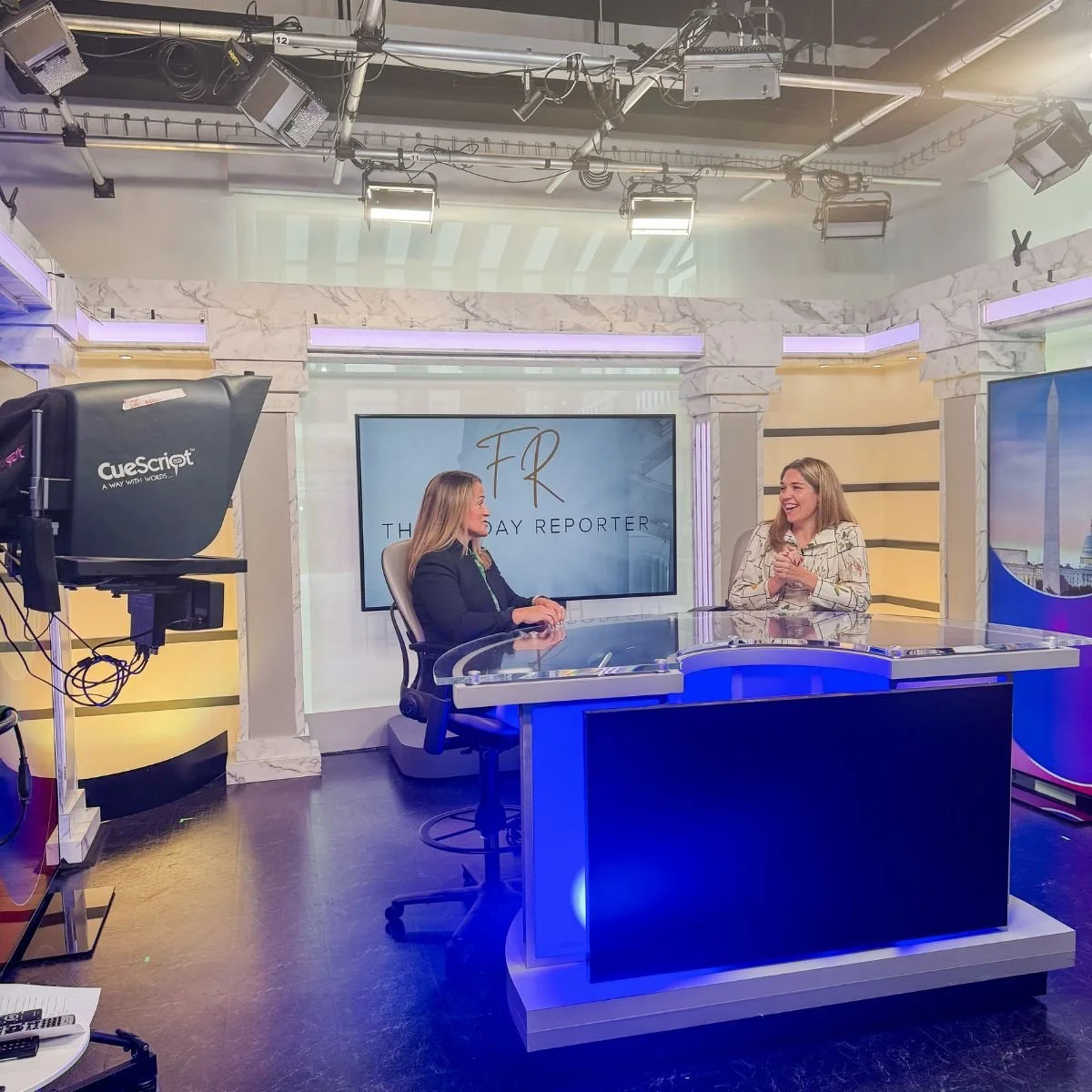
What’s the difference between public affairs counsel & a traditional PR firm?
A traditional public relations firm is typically built around output: press releases, media placements, social media content, campaign management. The measure of success is often volume — how much coverage, how many impressions, how many stories placed.
Public affairs counsel is built around judgment. The Friday Reporter does not operate as a production house. Lisa works with a small number of clients at any given time, providing the kind of honest, experienced perspective that is hard to get from a larger agency — where the incentive is often to keep producing, not to tell a client when the smartest move is to say nothing at all.
Her work sits at the intersection of media strategy, political intelligence and reputation management. It is less about generating attention and more about helping leaders understand the environment they are operating in, make sound decisions and protect what they have built. For executives who need a trusted advisor rather than a vendor, that distinction matters considerably.
Does the Friday Reporter work with clients outside of Washington DC?
Yes. While Lisa is based in Washington, D.C. and has deep roots in the national policy and media landscape, her client work is not limited by geography. Many of her clients are headquartered outside the Beltway but operate in environments where federal policy, national media narratives or Washington politics intersect with their business or mission.
The practical reality is that for most senior executives today — whether they are based in New York, Chicago, Atlanta or Los Angeles — what happens in Washington does not stay in Washington. Regulatory decisions, congressional attention, national media cycles and political dynamics affect organizations everywhere. Lisa's value to out-of-market clients is precisely her ability to translate what is happening in the capital and what it means for them.
Engagements are conducted in person, remotely or a combination of both, depending on the nature of the work and the client's needs.


Executive media coaching is the work of helping leaders communicate as well in public as they think in private. Most senior executives are deeply competent — they have earned their positions because of their expertise, judgment and track record. But the skills that make someone an effective CEO, association president or department head are not the same skills that make someone effective in front of a camera, in a congressional hearing room, at a podium or in a press interview.
Lisa's coaching work is practical and personalized. It is not about teaching executives to sound polished or to deliver a script. It is about helping them find their own voice — one that is clear, credible and consistent with who they actually are — and then learning to use it effectively in high-stakes settings.
Sessions may focus on message clarity and discipline, managing hostile or rapid-fire questioning, body language and presence, storytelling for non-technical audiences, speaking to journalists versus speaking to policymakers, or preparing for a specific high-profile appearance. The work is honest, direct and designed for people who take their reputations seriously.
Lisa also works with executives on interpersonal communication — helping leaders develop greater presence and effectiveness in internal settings, board rooms and one-on-one conversations where the stakes may be less visible but no less real.
What does executive media coaching involve?
How does Lisa Camooso Miller approach crisis communications?
Lisa's approach to crisis communications is rooted in a principle that sounds simple but is rarely practiced under pressure: restraint first, response second. In a crisis, the instinct is almost always to do something — to respond, to explain, to push back, to get ahead of the story. That instinct is frequently wrong.
Her first move with any client in a high-stakes situation is to understand the actual landscape before recommending action: What is the story? Who is driving it and why? What does the organization's response achieve — and what does it risk? What does silence cost compared to engagement? These are not rhetorical questions. They are the difference between a response that resolves a situation and one that extends it.
Lisa draws on more than two decades of experience managing communications in high-pressure environments — including the U.S. Department of Commerce, the Office of the Speaker of the House and post-September 11th recovery efforts in New Jersey. She has seen what crisis communications looks like when it works and when it fails. Her job is to bring that pattern recognition to bear before her clients make a decision they cannot take back.
In practice, crisis counsel may involve message development, media strategy, stakeholder communication, real-time situation monitoring and executive coaching through the arc of a difficult moment. The engagement is calibrated to what the situation actually requires.