
The Vibes Can Tell You a Lot: What the Ground Game Sees
Echo Canyon Consulting’s Jon Seaton on what canvassing reveals that race ratings miss, why campaigns need to log off and what voters want to hear four weeks out.
Four weeks before an election, Washington refreshes everything. The forecasts. The race ratings. The feed. Jon Seaton gets on a plane.
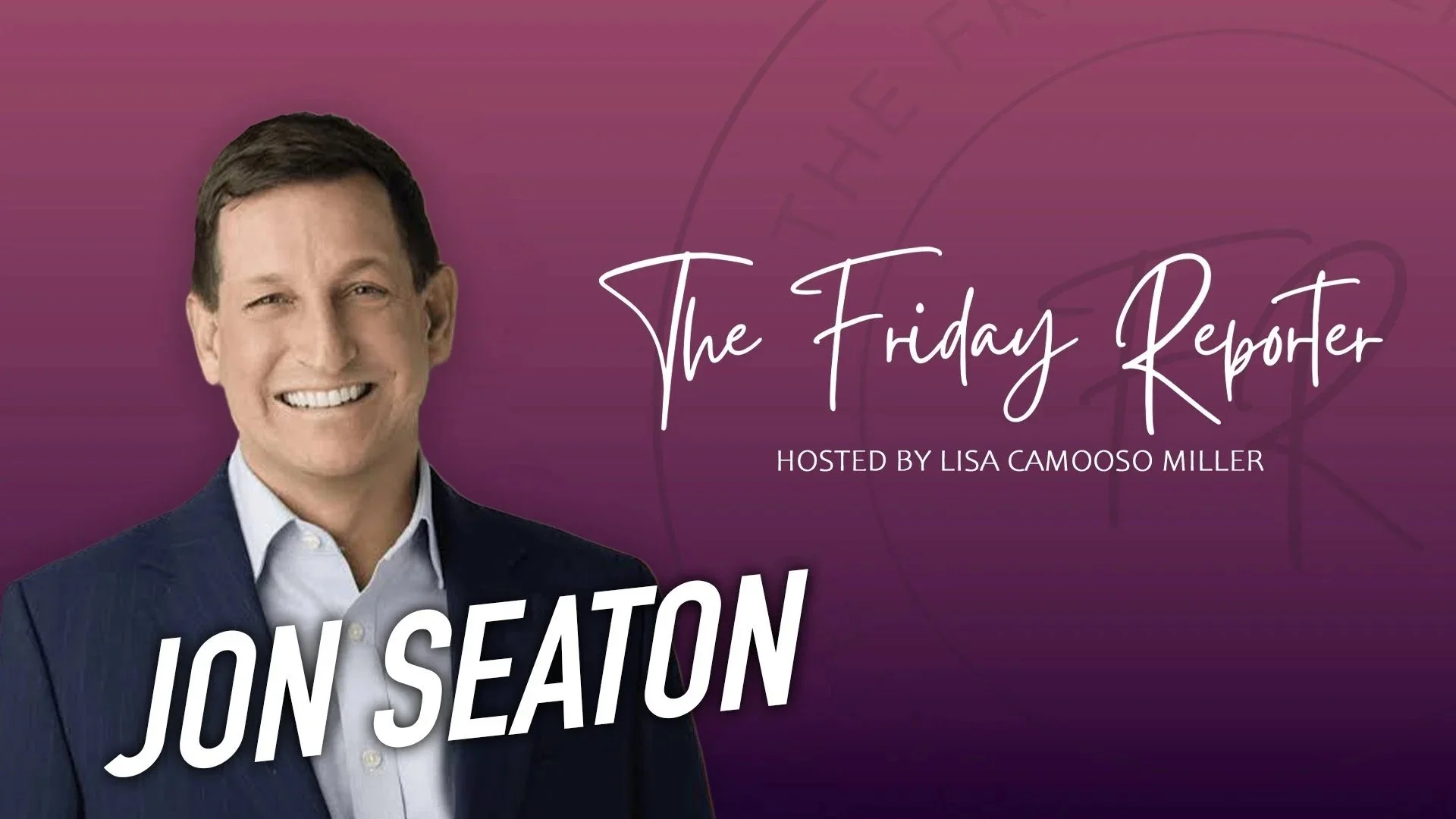
Jon is the founding partner of Echo Canyon Consulting, the Republican canvassing and direct mail firm named Best New Firm at the 2026 Reed Awards. He ran John McCain’s national field program in 2008 and advised Lindsey Graham. We came up together in Bush world at the RNC — Jon in the field, me on the communications side — and this week he joined me on The Friday Reporter to compare notes on what has changed in campaigns and what never will.
Why Race Ratings Can Miss What the Field Sees
Jon isn’t anti-analytics. He runs a firm that lives on data. But he’s clear about its limits.
“The fact remains that politics is a people business. And there are some things that are just not going to be captured by just raw numbers and polling alone.”
Polling has gotten harder every cycle. Race ratings help set the narrative, but no forecaster can stand in 40 or 50 congressional districts at once, and some of what feeds those ratings is, in Jon’s words, more noise. Everyone in this business has a race that was written off and then wasn’t.
So he pairs the numbers with people: reporters, activists, business owners and families who aren’t thinking about politics at all. He checks Google Trends. He watches the national environment. And he pays attention to momentum.
“When you’re in a district, when you’re in a state, you can really feel when momentum has shifted. They joke about the vibes, but the vibes can tell you a lot.”
For Jon, the data and the vibes aren’t rivals. He uses each one to check the other.
From Clipboards to Phones
On Bush-Cheney ’04 we went door to door with clipboards and paper. Can the president count on your support? Great, here’s a yard sign. If we were lucky we called that voter one more time before Election Day.
What changed everything was Karl Rove’s insistence that grassroots could be measured like money raised or quotes in the paper. Doors knocked. Voters reached. Events attended. Every single day.
“Now it all happens on a phone. You can talk to so many more people. You can learn so much more about them before you ever knock on their door.”
That discipline didn’t stay inside campaigns. Every corporate and issue campaign that works today runs on it, which is why Echo Canyon’s public affairs practice in Phoenix sounds a lot like its campaign shop in Washington.
The Streaming Problem in Campaign Advertising
A campaign Jon worked on a cycle or two ago was spending heavily on television and stuck at a ceiling. So they added one question to a poll: what screens do you watch? Almost half the respondents were getting their entertainment through streaming.
“We could run all the ads we want on cable or even broadcast, and they just weren’t being seen.”
Television is still the howitzer of campaign communications. But the mix has to follow the voter, and the voter is more targetable than ever. Echo Canyon doesn’t knock every door in a precinct or mail the whole voter file. It talks to specific voters about the issues that move them and sends what it learns back to the campaign.
What Voters Actually Want to Hear
Ask Jon what Washington is overweighting this fall and he doesn’t hesitate.
“I don’t know one person in Phoenix, Arizona that cares about what the Kennedy Center is called.”
Voters want to afford groceries and a tank of gas. They want to hear how a candidate will make their family’s life better. Jon took a lesson from John McCain on how to say it: “You can question their judgment. You shouldn’t question their motives.”
The campaigns that miss this are the ones that are entirely too online. They chase the outrage of the day because it feels good — Jon calls it “almost like catnip” — and it doesn’t move a family worried about saving for the future. His fix is blunt. Take Twitter off your phone and listen to voters.
Listen to the Little League Commissioner
The best signal in a district often comes from the local sheriff or the Little League commissioner calling the campaign office to say what they’re hearing. Smart campaigns don’t write that off as one more complaint. They build it into the message.
Jon still remembers a supporter at a victory party that didn’t turn out to be one. She had to take the kids to the school play, she told him, but her husband voted. They kind of needed both votes. Every field operative has a story like that, and it never stops shaping how they work.
On Election Day, Jon sends one tweet: What are you hearing? It’s the same question he asks all fall. The campaigns that win in November are the ones that actually wait for the answer.
Watch the full conversation with Jon Seaton on YouTube [link] or listen to The Friday Reporter on Apple Podcasts and Spotify.
Episode Details
Guest: Jon Seaton, Founding Partner, Echo Canyon Consulting (X: @jonseaton18, @echocanyonUSA)
Host: Lisa Camooso Miller, The Friday Reporter
Recorded: October 2026, four weeks before the midterms
Topics: race ratings and polling, canvassing and direct mail, campaign advertising and streaming, local grassroots, Election Day

AI Data Centers: The Sleeper Issue of the 2026 Midterms
Axios' Jim VandeHei and Cook Political's Jessica Taylor never compared notes — but a week apart, on two different shows, they landed on the same sleeper issue for 2026.
Jim VandeHei brought up golf courses twice in one hour — and he wasn't talking about golf. He was talking about data centers, and specifically how much water they use compared to a golf course, and how almost nobody arguing about them online has actually checked. That gap, between what people are reacting to and what they've actually verified, is the story. Washington has spent 2026 debating AI policy as a fight over chips, compute and federal regulation. Two conversations recorded a week apart — one with a media CEO, one with a campaign analyst — suggest that fight is already over, and a different one has started in its place: AI data centers are shaping up to be a sleeper issue of the 2026 midterms.
Why AI Data Centers Are Becoming a Political Flashpoint
VandeHei built Politico. Then he built Axios. He talks to more AI executives in a month than most senators do in a term, so when Brody Mullins and I sat down with him on The Deciders this week, I expected a conversation about the technology itself — the compute race, the regulatory fights in Washington, the usual. Instead, he wanted to talk about the backlash.
"A data center's become a stand-in for all of artificial intelligence," he told us. "You really think the average person has sat there and studied whether or not it uses more water than a golf course or not? They just hear it and they have a reflexive reaction to it."
That's the mechanism worth sitting with. A data center is the one piece of the AI economy most people will ever actually see: the humming building off the highway, the spiked electric bill, the water table nobody used to think about. Abstract debates over chips and compute don't generate reflexive reactions. A building in your community does.
What Jessica Taylor Is Hearing From Voters in Ohio, Wisconsin and Kansas
A week earlier, on The Friday Reporter, Jessica Taylor described almost the same dynamic from the opposite vantage point. Taylor is the U.S. Senate and Governors Editor at The Cook Political Report, and she talks to more campaigns, in more states, than almost anyone in nonpartisan political analysis. She wasn't theorizing about what could happen. She was reporting what she's already hearing — unprompted, from voters and candidates in Ohio, Wisconsin and Kansas, where data centers have become a live, organic issue that nobody scripted for them.
Two guests, two shows, one week apart, arriving at the same read from entirely different directions: a media executive watching the national conversation, and a political analyst watching it show up precinct by precinct. Neither one used the phrase "sleeper issue." They didn't need to.
Is AI Policy a Washington Story or a Main Street One?
For most of 2026, it was a defensible read to treat AI policy as a Washington story: a fight over export controls, chip manufacturing, federal preemption of state AI laws. That was true in January. It isn't true anymore. The center of gravity has moved from Capitol Hill hearing rooms to zoning meetings and utility bills. That's a different kind of fight, with a different set of people arguing it, and it doesn't wait for anyone's policy shop to catch up.
Could a Party Actually Call to Shut Data Centers Down?
VandeHei went further than describing a mood — he described a plausible political move. "I think there's a not insignificant chance that one of the parties — and I think it'd be the Democrats — will call for like literally shutting it down," he said. Whether or not that specific prediction holds, the fact that it's a live enough possibility for someone who talks to AI executives daily to say out loud on tape is itself the signal. As VandeHei put it: "An all-powerful technology with an all-powerful oligarch cannot coexist with people who have deep envy and feel like they're getting screwed by the system. And that's where we're at right now."
What This Means for Communicators and Campaigns Heading Into 2026
For anyone doing public affairs, crisis communications or campaign strategy work right now, this is the kind of gap worth watching closely: the difference between what your policy team is prepared to defend and what your community relations team is actually being asked about. Most AI companies and their trade associations have built their public affairs muscle around Washington — testimony, coalition letters, op-eds aimed at people who already agree with the underlying premise that AI is good for the economy. That muscle doesn't do much for you at a county zoning hearing where the question isn't "should AI exist" but "why is my utility bill going up and my water pressure going down."
If the data center down the road becomes the way voters process "AI" as an issue, the industry, its advocates and the campaigns adjacent to it need a message that works at that zoning-meeting level, not just the committee-hearing level. That means local messengers, not national ones. It means answering the water and power questions with numbers before a reflexive reaction fills the silence, because VandeHei's point cuts both ways: if nobody has actually studied the golf-course comparison, that's an opening for whoever gets there first with real data — the industry, or its critics.
It also means treating this as a bipartisan risk, not a partisan one. VandeHei's read is that Democrats are the more likely party to call for shutting data centers down, but Taylor's on-the-ground reporting doesn't sort neatly by party — she's hearing it from voters and candidates across three different states with three different political profiles. An issue that shows up organically in Ohio, Wisconsin and Kansas alike isn't a base-mobilization play. It's a kitchen-table one, which is exactly the kind of issue that outlasts a single election cycle once it takes hold.
Keep an eye on Ohio, Wisconsin and Kansas next year — not because of who wins, but because of what the losing side decides to blame.
The Pattern Behind the Story
There's a broader lesson here for anyone whose job is translating what happens in Washington for people who don't live there, or translating what's happening on the ground for people who do. VandeHei is fluent in how policy elites and executives talk about AI. Taylor is fluent in how campaigns and candidates talk to voters about it. Neither one is wrong. They're describing two different rooms that haven't quite figured out they're talking about the same issue yet. That's usually where the most useful insight sits — not in picking the "right" room, but in noticing when two credible, unconnected sources start describing the same shape from opposite sides of it.
Key Takeaways
- Washington has debated AI policy as a fight over chips, compute and federal regulation — but that framing is losing ground fast.
- A data center is the most visible, tangible piece of the AI economy most voters will ever encounter, which makes it the natural target for reflexive backlash.
- Axios CEO Jim VandeHei says there's a "not insignificant chance" a major party calls for shutting data centers down outright.
- Cook Political Report's Jessica Taylor is already hearing this show up organically with voters and candidates in Ohio, Wisconsin and Kansas.
- For communicators and campaigns, the real risk is a gap between the policy-level message and the message needed at the community and zoning-meeting level.
The Deciders episode with Jim VandeHei
The Friday Reporter episode with Jessica Taylor
---
This piece draws on conversations from two Friday Reporter Public Affairs properties: The Deciders, Lisa Camooso Miller's co-hosted show with Pulitzer Prize-winning journalist Brody Mullins, and The Friday Reporter, her weekly conversations with the journalists, strategists and analysts shaping Washington. Listen wherever you get your podcasts, and subscribe to Lisa's Substack so you never miss a new episode or column.